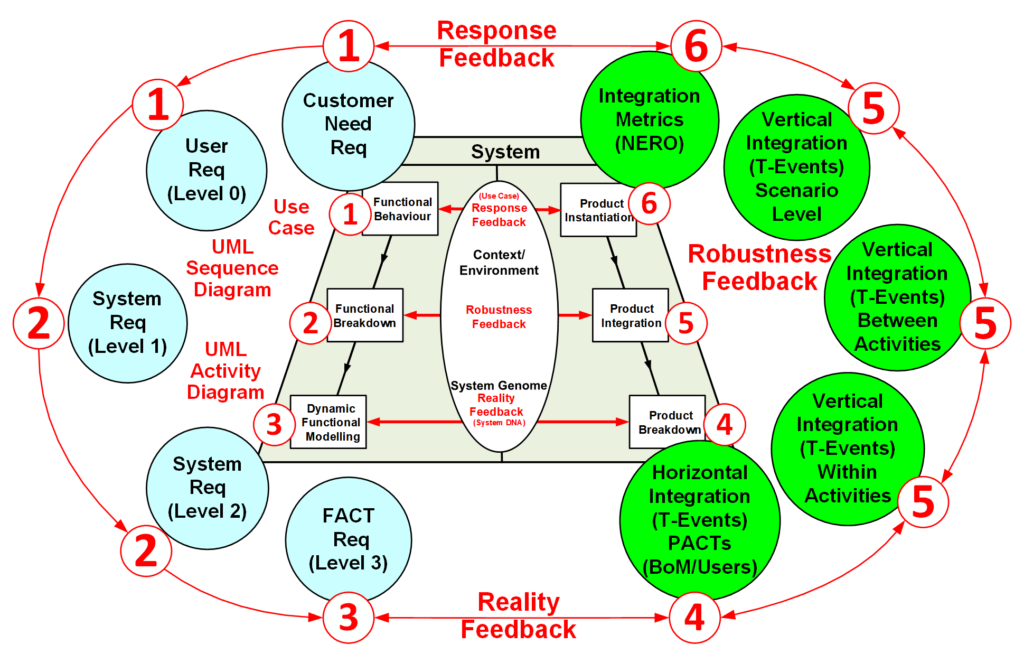
Simplifying Complexity – The System Genome
Author: Stuart Aplin, Retired BAE Systems Project Manager and Systems Engineer
stuart.aplin@hotmail.com
Abstract
The Problem Systems Engineering has is that it can be seen as adding little value.
I am a systems engineer so why would I say systems engineering is seen as adding little value?
Simply because currently, systems engineering, is seen as that front end thing that spends a lot of time, effort and budget to tell us stuff we already know.
There are very few projects that are started where the solution is not already known. The clue to the solution is usually given in the company’s name or market sector. As such most of the senior decision makers already have in their mind the solution regardless of what the systems engineers tell them. Also, when it comes to affordability, we know that the system commissioner is a bird in human’s clothing as they always end up saying “cheap cheap”.
If they only have funding for 20 ambulances the solution is most likely going to be 20 ambulances, which also fits in very well with the senior team’s view of the project. As a result, the value of systems engineering is questioned.
However, as systems engineers, if we can use that solution as our starting point instead of functions, things can be different. That is the purpose of the System Genome as it is made up of strands of System DNA which are both functional and physical at the same time.
So, through the System Genome the project can switch from the physical solution (Physical Activity – PACT) into the functional world (Functional Activity – FACT) at any time to ensure that functionality and context is not lost.
Simply because currently, systems engineering, is seen as that front end thing that spends a lot of time, effort and budget to tell us stuff we already know.
There are very few projects that are started where the solution is not already known. The clue to the solution is usually given in the company’s name or market sector. As such most of the senior decision makers already have in their mind the solution regardless of what the systems engineers tell them. Also, when it comes to affordability, we know that the system commissioner is a bird in human’s clothing as they always end up saying “cheap cheap”.
If they only have funding for 20 ambulances the solution is most likely going to be 20 ambulances, which also fits in very well with the senior team’s view of the project. As a result, the value of systems engineering is questioned.
However, as systems engineers, if we can use that solution as our starting point instead of functions, things can be different. That is the purpose of the System Genome as it is made up of strands of System DNA which are both functional and physical at the same time.
So, through the System Genome the project can switch from the physical solution (Physical Activity – PACT) into the functional world (Functional Activity – FACT) at any time to ensure that functionality and context is not lost.
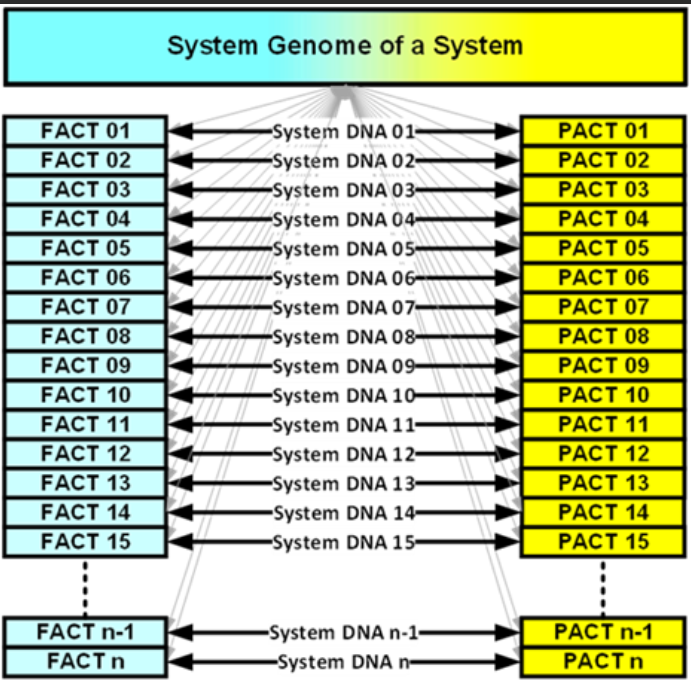
Figure – System Genome
This perception of wasted effort is not helped when systems engineers present the work they have been undertaking in UML/SysML (Universal Modelling Language/Systems Modelling Language). Documents with different shaped boxes, lines and stick figures called actors (that are not always people!).
Such an approach doesn’t capture the imagination and confuses most. So, at great cost, all systems engineering appears to be doing, is sorting out some details and setting up a very complex requirement set for contractual acceptance.
Such an approach doesn’t capture the imagination and confuses most. So, at great cost, all systems engineering appears to be doing, is sorting out some details and setting up a very complex requirement set for contractual acceptance.
Once things start to go wrong, systems engineering is considered relevant as it deals with those unwanted gremlins (emergent issues). The rest of the project can live in a no fault culture as they know it’s the systems engineer’s fault. Which is fine, however, by then it’s usually late in the project and the damage is difficult to fix, resulting in late deliveries, cost over runs and, in most cases, reduced performance.
Through the extraction of the System DNA, that makes up the System Genome, you gain an understanding of how every system strand operates and, more importantly, how these system strands interact with all the other system strands. Therefore, not only does the System Genome allow a better understanding of the system during development, it continues to support through the whole life of the system. Each physical strand of System DNA (PACT) must be tested in isolation to prove it is operating correctly. With this understanding you know that any further issues can only occur where these PACTs interact. Therefore, using the System Genome, if the system fails or is changed a full assessment can be made regarding the whole system’s operation and performance.
So, how do we change the mindset of systems engineering as adding little value?
The answer is to keep systems engineering relevant by making sure it is front and centre throughout the project. This is not the case with our current processes.
However, with the use of the System Genome, systems engineering does remain front and centre. As a consequence, its relevance and added value is clear.